| |
HISTORY
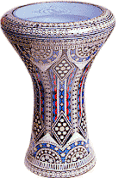 The
origin of Doumbek is not known exactly though we suspect it was
during the Neolitic period. We don’t know either about its
geographical origin, some people say that it’s arabic and some other
say that it’s egyptian. The
origin of Doumbek is not known exactly though we suspect it was
during the Neolitic period. We don’t know either about its
geographical origin, some people say that it’s arabic and some other
say that it’s egyptian.
Its name could come from the word Darba that means beat. Music in
the Middle East has a development in a religious environment and has
spiritual connotations. It influenced American culture when the
moors came to the continent with Spanish people.
This influence begins in during Otoman Empire age, when music had a
great diffusion and importance.
Court sent musicians to different parts of the Empire and remote
places where the influence of this culture mixed with the other
ones, and it was very important in architecture in Spain too.
Methodology
I PROVIDE PC MUSIC SOFTWARE FOR
WINDOWS 64 BITS FOR RHYTHM READING WITH REAL DOUMBEK SOUNDS, WHICH
MAKES LEARNING EASIER.
YOU CAN LEARN THE RHYTHMS BY LISTENING TO THEM AS THEY SOUND, YOU
CAN LEARN TO READ THEM BY MUSIC AND PLAY THEM AND YOU CAN PLAY THE
RHYTHMS AT THE SAME TIME AS THE SOFTWARE AND ALSO CHANGE THE SPEED
OF PLAYING.
D
oumbek study includes: Different types of
sounds.
Technique study
Musical reading
Reading by system of lyrics
Arabic rhythmsBase 2 rhythms: Arabic, Bayou, Hagalla,
Karatchi, Sufi, Tsamico and Zar.
Base 3 rhythms: Cantiga, Khalas, Qudddam, Samai Darij, Tayir,
Wahida.
Base 4 rhythms: Ad Nan, Al Awwa, Baladi, Cocek, Darj, Falahim,
Guwazi,Saudiu,Maksoum, Masmoudi,Mukhamas, Nawari, Saidi, Sawt, Sirto,
Sombati, Wahida, Yamani, Saffa.
Base 5 rhythms:Aqsaq Samai, Curcuna,Daveed,ubar, Samai, Samai
Thaqil, Shoush, urkish
Base 6 rhythms:Ancestral
Spirit, Bassist, Chauka, Maqmaq, Moroccan, mudawwar, Persian, Samah,
Sawt, Sha Boa,sheestosh, Sudasi, Sufi, Yugrid.
Base 7 rhythms: Dawr Hindi ,Devra HindiGeek, Kalamatianos,
Laaz, Muhajjar,Zenkov
Base 8 rhythms: African dance Btayhi, Chiftatelli, First
Thaqil,Qaayim, Wa’Nisf, Pakistani, Sword dance, Taxim, Wahe Tawila,
Wahidah
Base 9 rhythms: Aksuk, Aqsaq,Karsilama, Zabek, Zeibekiko
Assembling
Polyrhythms
Exchange of patches and Doumbek tuning: The
interested person brings tha patches or asks Daniel Mele about the
appropriate ones. The replacement costs: US$ 10 |
|
